
Black Rock
The island has been stockpiling inert waste at cost to the taxpayer since Longue Hougue became full and a new solution has been sought for more than 10 years.
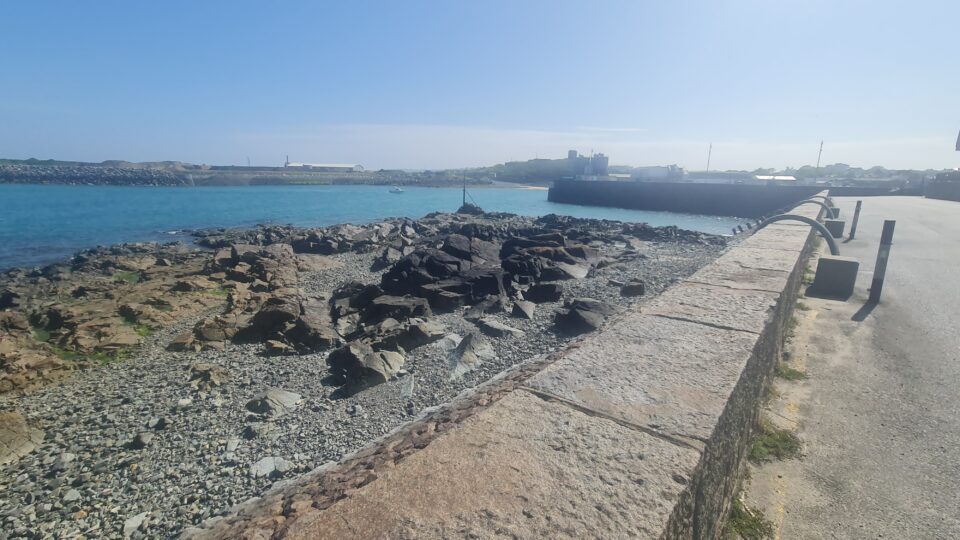
In 2025, the States of Guernsey directed that new inert waste should be used at Black Rock, St Sampsons to reclaim land that ultimately brings opportunity for housing and community spaces.
The Guernsey Development Agency is charged with designing this as part of its objectives to enhance the east coast of Guernsey. Guernsey Waste will then be leading on the detailed design and construction works.
Inert waste is non hazardous construction materials such as rubble, hardcore, concrete, bricks, ceramics, and clean soil. The materials are non-hazardous do not react or decompose which makes them suitable for reuse or recycling and land reclamation.
Black Rock turns a liability into a community asset
The strategic reclamation at Black Rock is a vital solution to Guernsey’s mounting inert waste crisis. Guernsey has been looking for a location to store its inert waste for more than 10 years and it is currently being stockpiled at a logistical and financial cost to the taxpayer. The more we stockpile, the higher the cost of transferring this to a new site.
As Black Rock is infilled over the next 20 years, it offers an opportunity to build housing and green community spaces and facilities in a phased approach. This means we don’t have to wait 20 years before this housing can be built. This therefore turns a liability into an asset.
By reclaiming land in this way, the project is solving one if the island’s costliest problems whilst also bringing opportunity to solve our housing crisis By recycling this material to reclaim land, we solve a problem and create an opportunity- the physical foundation for 600 homes and new coastal green spaces.
An inert waste solution that pays for itself
The construction of the inert waste site and land reclamation will be cost neutral, meaning it will pay for itself from the gate fees that the construction industry pay to deliver the materials.
Building on ‘the grey’ and protecting Guernsey’s green
This is a bold, sustainable solution to meet our housing targets while protecting the green spaces we love. Conservation is central to every single element of our work. We have collaborated with local environmental groups and undertaken numerous tests to map and take steps to mitigate any environmental impacts on wildlife, air quality, tidal effects and more.
Project updates
Since 2025, the Guernsey Development Agency, as part of its remit, has been working with Guernsey Waste to model and design the project. This will involve designing and constructing a rock revetment around Black Rock for inert waste to be stored.
We are working closely with experts including environmental groups and marine users to come up with a solution that recycles the island’s non-hazardous construction waste without impact to navigational safety or the environment.
Currently, we are in the first part of the design phase which means gathering data, designing, understanding potential impacts, talking to our stakeholders and adjusting accordingly.
This involves studying data from wave modelling, local bathymetry (maps of the seabed) and using this to test options and refine designs. We will also be organising for a simulation for Guernsey’s marine pilots to check there are no navigational safety issues.
An Environmental Impact Assessment is currently under way with Haskoning, a world leading sustainability engineering firm. Conservation is central to every single element of our work. We have collaborated with local environmental groups and undertaken numerous tests to map and take steps to mitigate any environmental impacts on wildlife, air quality, tidal effects and more.
Depending on this data gathering and design progress, options for the different designs of revetment for Black Rock inert waste site will then be presented to the States of Guernsey in early 2027 for approval.
Construction is hoped to begin towards the end of 2027.
Read the facts